|
 fractured reservoirs
The other Sections of this Chapter showed numerous examples
of individual fracture location techniques. The case
histories shown here show examples of projects that may use
more than one technique, or amplify the use of a single
technique in a unique environment. Study these six examples
for the subtle clues that help identify fractures on open
hole logs.
A Classic Example
This example consists of a very complete set of older logs, all
of which show a short fractured zone at 376-381 m. This is the
best you will get in older wells before the era of image logs.
If you are chasing tight gas, tight oil, or shale gas, you will
need to be competent at recognizing all the clues. See if you
can spot all the fracture indicators before reading on.
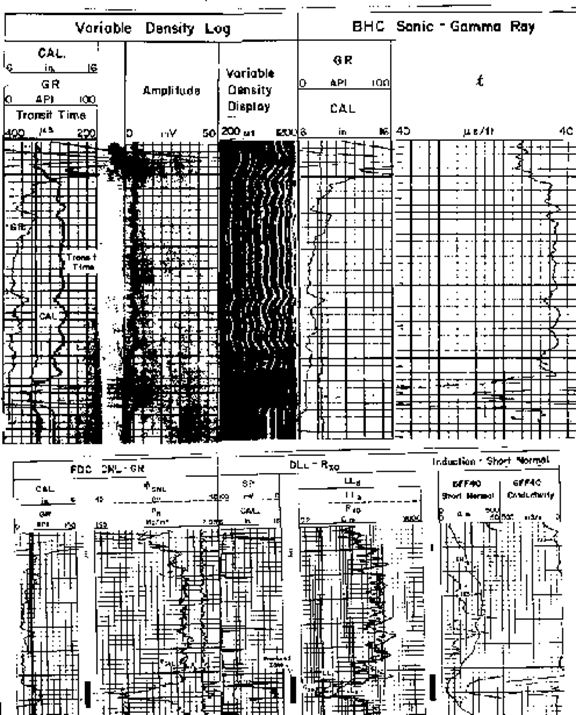
Open hole logs for A Classic Example
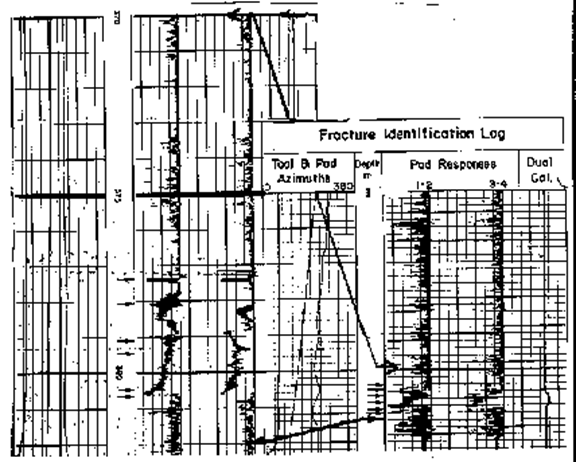
Dipmeter log for A Classic Example
The
deep resistivity curve has a clear conductive anomaly showing
that at least some of the fractures appear to be sub-horizontal
with respect to the well. The shallow resistivity is affected
the same way. The dual laterolog and Rxo log curves are also affected.
The Rxo reading is very low. Because the shallow resistivity is
lower than the deep, fractures are indicated. Mud resistivity
is too fresh for this to be a salt mud invasion phenomenon.
The
density and neutron logs show a high porosity zone while the density
correction is very hashy.
The
sonic log is strongly affected by cycle skipping. The waveforms
on the sonic variable intensity display practically disappear.
The sonic amplitude curve is very low. The caliper may be suggesting
some mud cake, while the GR log indicates some radioactivity,
probably due to uranium salt accumulation in the fractures.
Finally,
the dipmeter fracture identification log clearly shows the fractures
as individual anomalies. Six different anomalies can be defined;
some probably are sub-horizontal. Very short vertical fractures
are also present. There was a serious loss of circulation opposite
this zone when the well was drilled.
Austin Chalk Example
Logs
from 3 different Austin Chalk wells are shown in here.
They all demonstrate the typical Austin Chalk pattern of heavy
fractures near the top of the zone, grading to few fractures near
the middle. The amount of fracturing does vary considerably between
wells. This can be seen by the different amount of activity on
the dipmeter curves and is also reflected in the initial production
of the wells.
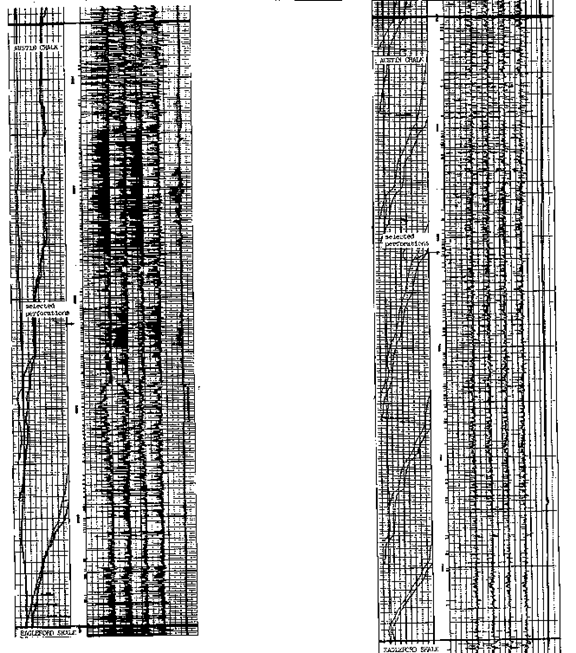
Dipmeter curves for Austin Chalk Example
Dipmeter
curves presented in Fracture Identification Log (FIL) format show
fractured intervals. The well on the right has
far fewer fractures than the well shown on the left.
Austin
Chalk fractures can be oriented by using the dipmeter azimuth
to determine the direction of hole diameter elongation. A frequency
plot of fracture orientations from wells in the Pearsall Field
area, have an average strike of N 39 E with a range from N 13
E to N 57 E.
Reservoir
development proceeded by orienting large fractures in the good
wells or in offset wells where a dipmeter was run. New locations
were drilled along these joint lineations. Where an offsetting
good well had no available dipmeter data, an average orientation
value was used appropriate for that area. Well potentials and
production records substantiate the success of this method.
Fractured Shale Example
This
is a comparison of logs over a section of the upper Miocene fractured
shale from Kern County, California. This section is noted for its high apparent
porosities (40%) and low permeabilities. Fractures are required
for it to be productive. The interval was conventionally cored
through the top 20 feet (6.1 m) of zone. The core was described
as shale, thinly laminated and fractured parallel to low angle
bedding planes.
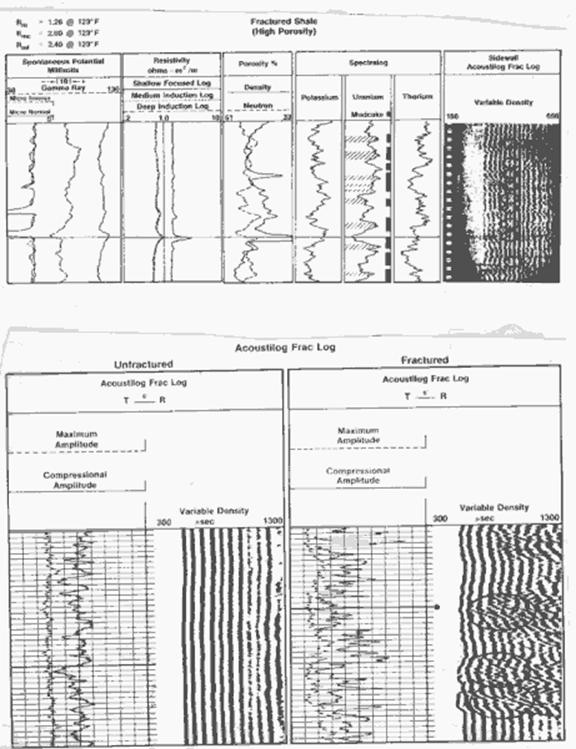
Open hole logs for Fractured Shale Example
The
SP, gamma ray, microlog, dual induction focused log, density,
neutron, gamma ray spectral log, and sidewall acoustic log
from this well are shown above. The resistivity
measurements show low resistivity and straight line character.
The SP did develop and has the same approximate character as the
gamma ray.
The
gamma ray spectral log provides the most character through the section.
The method of analysis of the spectral log curves is to look for
intervals which have low values of potassium and thorium. These
are zones with less clay minerals, possibly less plastic and more
receptive to fracturing. In these zones, present or past permeability
is indicated by a higher uranium content. Several such intervals
exist and correlate with zones on which mudcake formed indicating
present permeability. Intervals which show the higher uranium
with lower potassium and thorium have been marked with black bars.
They are the most likely to produce.
The
sidewall acoustic variable density log is typical of a high porosity
sequence. Intervals on the log show high compressional amplitude
and reduced shear amplitude, indicating low angle fractures. A
few intervals illustrating this response are circled. Chevron
patterns are faintly.
A
portion of un-fractured log is shown opposite a fractured section
for comparison in the bottom half of the above illustration. Notice the
different character between the compressional amplitude and the
variable intensity display. The chevron patterns are quite distinct.
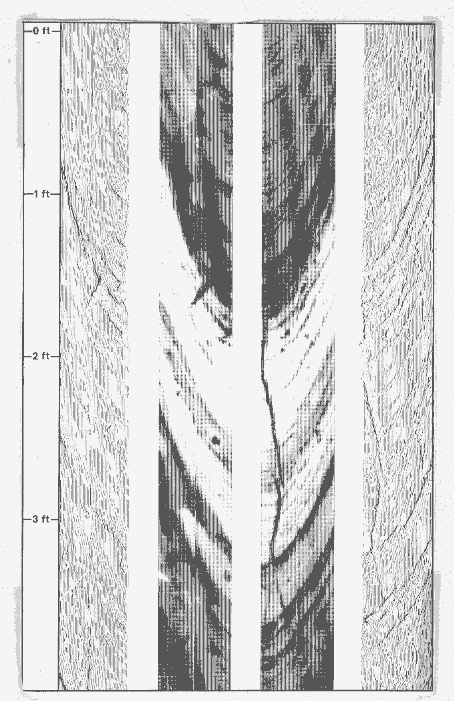
Formation Micro-Scanner in Fractured Shale
The
formation micro-scanner image of a similar fractured shale is
shown above. Notice the steep dips, fine bedding, and
the fracture. The sand/shale ratio can be determined easily by
computer processing of the image.
Vertical Fracture in Vertical Hole
This
example shows a modern televiewer log over a portion of a hole
with a vertical fracture intersecting the borehole. The image
is displayed as a 360 degree unwrap with East at the center of
the image, and as an equivalent core image, with South in the
middle.
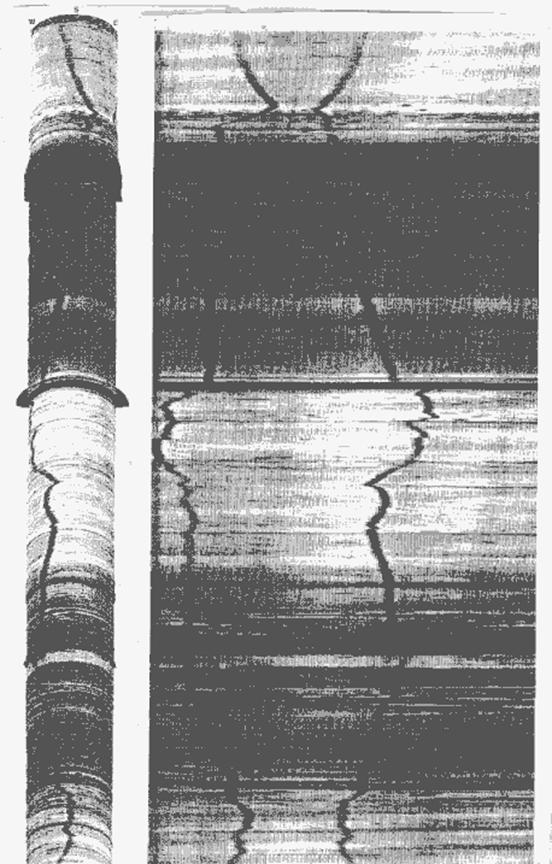
Acoustic televiewer in vertical fracture, vertical
hole
Notice
the enlarged borehole in some of the thin shale beds. The fracture
plane is far from smooth and it wanders from one side of the borehole
to the other. A dipmeter or older FMS might miss this fracture,
or indicate discontinuous vertical fractures. Light colors are
higher acoustic impedance, probably dolomite versus darker colored
limestone and limey shales. Shale beds are black and washed out.
Vertical Fracture in Horizontal Hole
Here
a drill pipe conveyed televiewer was run over a 1500 foot horizontal
stretch from the intermediate casing shoe. The zone is an upper
Cretaceous chalk in which fractures play a vital role in productivity.
Most vertical wells penetrate only one or two fractures and deplete
quickly. A horizontal well can penetrate many fractures and production
can be significantly enhanced.
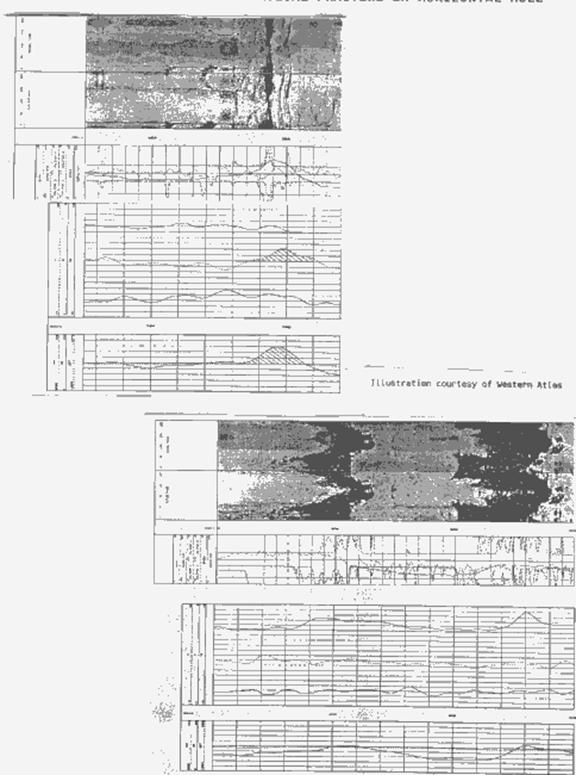
Acoustic televiewer in vertical fracture, horizontal
hole
The
televiewer images and uranium precipitation shown on the spectral
gamma ray log indicate fractures clearly.
This allows the operator to position completion hardware, such
as centralizers and external inflatable casing packers correctly.
In this example, the hole was designed to run close to the top
of the chalk, and it penetrated the marly zone above in a few
places, shown by the dark bands. It sometimes helps to look at
these images horizontally when analyzing horizontal wells. Both
acoustic amplitude and acoustic travel time images are presented
side by side. The black sinusoidal patterns are wider than the
actual fractures as this is a pretty old version of the logging
tool - a more modern log would do a better job than this.
|